
Before You Start a Parasite Cleanse for Your Child: What Most Moms Need to Know
Thinking about a parasite cleanse for your child? Learn why readiness, minerals, and cellular energy may matter more than the protocol itself.
Over the last several years, parasite cleansing has become one of the most widely discussed topics in online parenting and functional health spaces. It shows up in social media posts, podcast conversations, and recommendation threads with increasing frequency, often framed as a missing piece for children experiencing a wide range of symptoms.
A parasite cleanse refers to any protocol designed to reduce or eliminate organisms in the digestive tract, often using herbal, nutritional, or pharmaceutical approaches.
For many parents, especially those who have already been on a long, complicated and even expensive health journey, these conversations can feel both hopeful and urgent. When you have already tried dietary changes, supplements, elimination diets, practitioner visits, and extensive research without clear resolution, the idea that something as specific as parasites could explain the picture can feel like finally getting a missing answer.
I understand that pull.
But I also think this topic requires more nuance than it is often given.
Not because parasites are irrelevant. They may absolutely be part of the picture in some cases. But because identifying a possible factor is not the same thing as understanding whether it should be the next priority.
And that distinction matters more than most people realize.
Why Parasite Cleanses Have Captured So Much Attention
It is not difficult to understand why parasite cleansing has become so popular. In many cases, it offers a simple and compelling narrative: if symptoms persist, there must be an underlying organism driving them, and if that organism is addressed, improvement will follow.
For parents who feel they have exhausted conventional explanations, that narrative can be incredibly appealing.
It also fits neatly into a broader trend in health culture that emphasizes root-cause identification. The idea that there is always a singular underlying issue can feel more manageable than the reality that many symptoms emerge from overlapping systems that influence one another over time.
However, human physiology rarely behaves in a linear way. A child’s symptoms may reflect digestive function, immune activity, nervous system regulation, nutritional status, environmental exposures, stress load, or combinations of all of the above. Even when one factor is relevant, it does not automatically determine what should be addressed first.
The Question Most Parents Are Not Being Encouraged to Ask
In most conversations about parasite cleansing, the primary question becomes: should I do this?
A more useful question is often: is my child in a condition where this is likely to be helpful right now?
Those are very different considerations.
The body does not respond to interventions in isolation. It responds based on its overall state of resilience at the time an intervention is introduced. How well is the body able to handle an intervention at this current time? That includes energy availability, nutrient reserves, digestive capacity, immune function, and nervous system stability.
When those systems are functioning well, the body is often more adaptable and able to manage change. When they are already under strain, the same intervention can land very differently.
This is why timing is not a secondary detail. It is often central to outcome.
Why Cellular Energy Is a Central Piece of the Conversation
One of the most overlooked aspects of this entire discussion is the role of cellular energy.
Every physiological process in the body requires energy. Digestion requires energy. Immune responses require energy. Detoxification pathways require energy. Growth, repair, and recovery all require energy.
Even the ability to tolerate and process an intervention like a detox or “cleanse,” depends on energy availability.
This is where mineral status becomes especially relevant. Minerals are involved in hundreds of enzymatic and metabolic processes that support energy production and nervous system regulation. When mineral reserves are adequate, the body often has more flexibility in how it responds to stress. When those reserves are depleted, the margin for adaptation may become narrower.
This is particularly crucial when it comes to children, women of childbearing years, and those who are more vulnerable and sensitive.
This does not mean minerals are the only factor that matters. But they are often one of the foundational pieces that influences how everything else functions. They help determine whether the body can handle detoxing at this time.
The Missing Context Around Parasite Cleansing
One of my concerns with the way parasite cleansing is often discussed online is that it tends to focus almost entirely on the idea of elimination, without enough attention to the condition of the system doing the eliminating.
A cleanse is not a neutral process. It asks the body to do work. That work includes processing metabolic waste, managing immune responses, maintaining digestive balance, and regulating inflammation during the process.
In a child who is already well-resourced, that may be manageable.
In a child who is already depleted, it may not be as straightforward.
The irony is that the children who are the most symptomatic and seem like they might be most likely to have parasites are the ones that are most likely to be depleted.
This is where some parents begin to see unexpected reactions—changes in energy, digestion, sleep, mood, or symptom patterns during or after a protocol. There are many possible reasons for this, and each situation is unique. But one factor worth considering is whether the body had sufficient reserves to handle the demands placed upon it at that time.
The question is not only whether parasites are present, but whether the body is in a state to respond to treatment effectively.
Why Many Families End Up Cycling Through Protocols
In my experience, most parents are not struggling because they lack information.
They are struggling because they have too much of it, and try things randomly hoping it’s the thing that “sticks.”
By the time they seek deeper professional support, they have usually already explored multiple frameworks. One approach points to food sensitivities. Another to gut infections. Another to mold or environmental exposures. Another to parasites. Each perspective may contain some truth, but none of them alone seem to fully explain the picture.
This often leads to a cycle of trying one protocol after another, with partial improvements but no sustained clarity.
What is missing in most cases is not another intervention, but a way of understanding how to prioritize interventions. This is an art, it requires experience, and the ability to read what is going on with the body, in particular with data from actual labs.
The Real Question Beneath All of This
When I speak with mothers in this position, the question underneath everything is rarely about parasites specifically.
It is about uncertainty.
What am I missing?
Why did previous efforts help only partially?
What should I focus on first?
How do I know I am making the right decision?
These are not protocol questions. They are clarity questions.
And clarity changes everything.
How to Think About Next Steps Differently
Before starting a parasite cleanse—or any new health intervention—it can be helpful to pause long enough to widen the lens.
Instead of asking only whether something might help, it may be more useful to ask:
What does the overall picture suggest about my child’s current resilience?
Are there foundational areas that may need attention first?
Does the body appear prepared to handle the demands of this intervention?
What would make this the right timing, not just the right idea?
These questions do not always produce simple answers, but they tend to produce better ones. The problem is that this is often difficult to fully determine without doing testing to see what is going on with the body in the cells. What level of cellular energy does the body currently have? What can it handle? Where is it depleted and needs foundational work first?
The Goal Is Not More Interventions
In the long run, the families who tend to make the most meaningful progress are not necessarily those who try the most protocols. They are the ones who gradually develop a clearer understanding of what matters most at a given time.
Once that clarity begins to form, decision-making becomes less reactive. There is less chasing of trends, less second-guessing, and less pressure to constantly find the next solution.
Parasites may be part of the story for some children. But they are rarely the only story. It’s often strategically pulling back the layers of an onion in an appropriate sequencing order to make the most impact.
And before beginning any protocol aimed at addressing parasites, it may be worth asking a simpler, more important question:
Is this truly what deserves attention first?
For many families, the answer to that question becomes the turning point and clarity is found when looking at labs that show cellular energy levels first.
If you’re reading this and realizing you’ve been stuck in the cycle of trying different approaches without a clear sense of priority, it may be time to step back and look at the full picture more intentionally.
This is the work I do with families—helping you connect the dots so you can understand what’s most likely driving the picture and what deserves your attention first. We look at cellular energy by running labs that focus on the cells using hair samples. If you’d like support in doing that, you can learn more about working together or testing here.
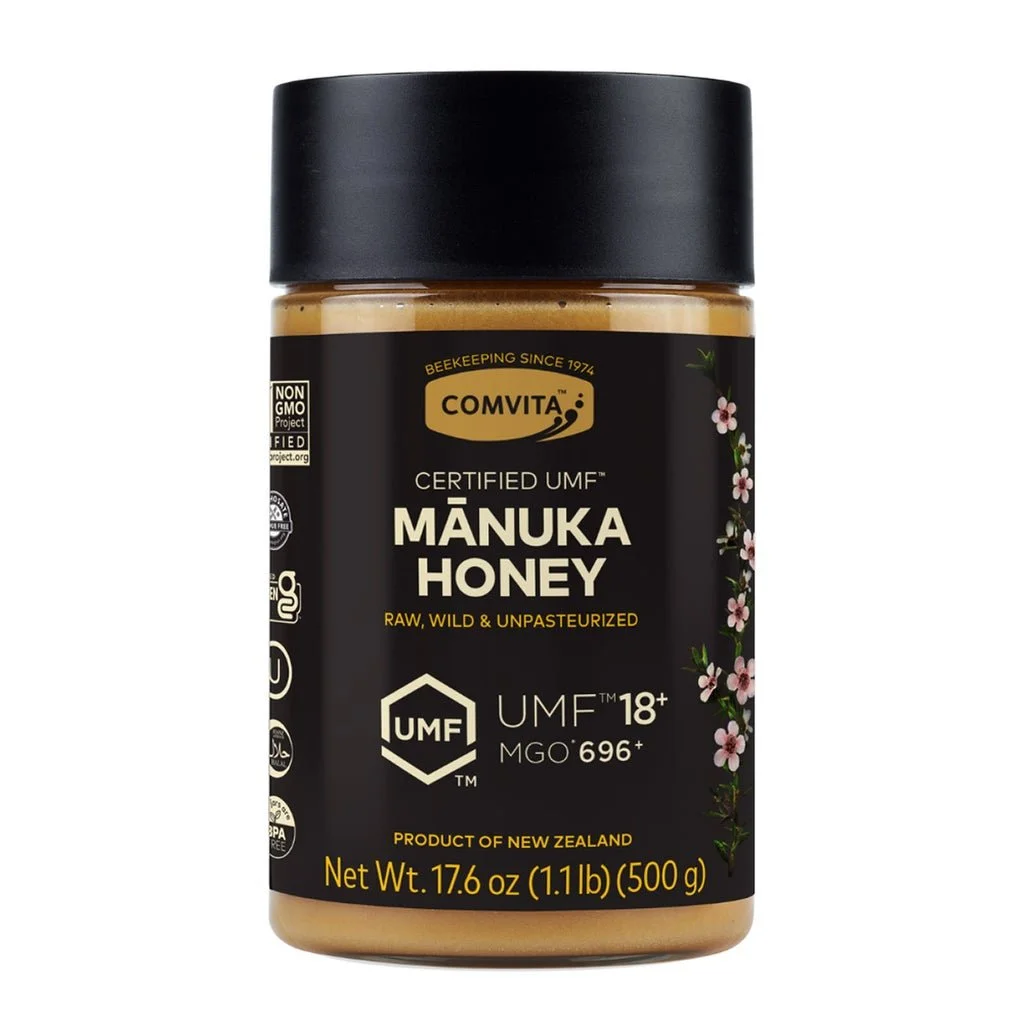
Manuka Honey for Kids: The Sweet Spread That Boosts Gut Health, Immunity, and More
Secret ingredient in sandwiches that helps my kids immunity and gut health!
If you’re looking for a healthier swap for sugary jams or jellies, let me introduce you to a little sweet something that has a big impact: Manuka honey. Recently, we switched out the jam in my kids’ peanut butter sandwiches, and this simple change has been such a win for both taste and wellness.
Enter: Manuka honey.
Have you heard of it?
Do you know about the amazing health benefits?
Why We Switched to Manuka Honey in PB Sandwiches
Most traditional jams are high in sugar and offer very little nutritional value. But Manuka honey? That’s a sweetener I feel good about using — even with its natural sugar — because it offers real wellness benefits for kids and adults.
What Is Manuka Honey?
Manuka honey is a specialty honey from New Zealand and Australia, made from the nectar of the Manuka tree. Unlike regular honey, it contains a powerful compound called MGO (methylglyoxal), which gives it unique antibacterial, antimicrobial, and soothing properties.
If you’ve heard people rave about Manuka honey, this is why.
Top Manuka Honey Benefits for Kids and Moms
Manuka honey has become a staple in our home because it supports immunity, skin health, and digestion — naturally. It also contains trace minerals like zinc, manganese, potassium, calcium, and iron, which help support immunity, bone growth, and overall wellness. Here are some of its top benefits:
Powerful antibacterial and antimicrobial activity
Supports wound healing and skin repair
Helps soothe sore throats and coughs
Calms mild digestive discomfort
Provides antioxidant support for whole-body wellness
Hydrates and nourishes the skin
How Manuka Honey Supports Gut Health & Probiotics
One of my favorite benefits — especially if you’re focused on gut health for kids — is that Manuka honey works as a natural prebiotic. That means it feeds the good gut bacteria, especially:
Bifidobacteria
Lactobacillus species
These are the same strains found in high-quality probiotics like Smidge, which many parents use to help support their child’s microbiome.
Think of it like this:
Manuka honey is the “good snack” you pack in your kids’ lunchboxes — except this one feeds their gut microbes instead of their stomachs!
A stronger microbiome means better digestion, better immunity, and better resilience during the school/daycare germ seasons. Even better, Manuka honey also helps keep harmful bacteria in check and soothes inflammation in the digestive tract.
Bottom line: It tastes amazing, the kids ask for it, and it quietly supports the microbiome and immune system. Big win for me and hopefully for you!
Where to Buy Affordable, High-Quality Manuka Honey
Let’s be real: Manuka honey can get expensive. But there are good options that won’t break the bank.
1. Costco
My go-to source!
They carry a high-quality, glyphosate-tested Manuka honey for around $22, which is incredibly reasonable. And because we use such a tiny amount, one jar lasts ages.

2. Fullscript Dispensary
If you don’t have access to Costco, you can find several trusted Manuka honey brands in my Fullscript dispensary.
Perks:
10% off any purchase
20% off recurring subscriptions
Create your Fullscript account and explore Manuka honey by clicking here.
Tips for Using Manuka Honey
Use just a small amount — it’s potent!
Great on peanut butter sandwiches, bread, crackers, or by the spoon.
Avoid mixing into hot drinks — heat can reduce the beneficial properties.
Do NOT give honey to children under age 1.
If you’re trying to improve your family’s gut health, boost immunity, or simply make a healthier lunchbox swap, Manuka honey is a delicious and powerful addition.
Your Baby or Toddler Isn’t Reacting to Foods Anymore—Yay!I’m celebrating with you. That is wonderful news.
But I also have a few questions…
These are the questions I wish someone had asked me when my oldest outgrew his food reactions:
A Few Important Questions to Consider
1. Do you plan to have more children?
Do you worry that they may have symptoms too?
2. Does your child still have any ongoing symptoms?
Poor sleep
Eczema
Frequent illnesses
Anxiety
Thin or dry hair
Bruises easily
Irritability or frequent meltdowns
ADHD, hyperactivity, or lack of focus
OCD-type behaviors
Tics
Dark circles under the eyes
White spots on fingernails
3. Do YOU experience any of these symptoms?
Easy bruising
Irritability or rage
Feeling “wired but tired”
Anxiety or depression
Bloating or digestive issues
Trouble tolerating foods you used to eat
Frequent headaches
Rashes
Seasonal allergies
Feeling very thin or depleted after a restrictive diet
Dry or brittle hair
White spots on fingernails
Constant exhaustion
Difficult PMS symptoms
Did you answer yes to any of these?
I listed these things because they describe what my children and I experienced even after they outgrew their food reactions—before we understood how depleted we had become from months (or years) of dietary restriction.
And before I realized that having one child with food reactions increased the likelihood that future children might struggle, too.
I also realized that I had dysfunction going on in my body that had contributed to what resulted in food-reactive babies.
What should your next steps be?
If you’re wondering whether you or your child may be depleted after long-term restriction…
If you’re curious about the root causes behind your child's past food reactions…
If you’re in that “what now?” phase…

I’d love to welcome you into my new space: Fed Well Holistic.
This is where we do family-focused work.
Where we explore what’s happening inside the body—at the cellular level.
Where we rebuild foundations that are crucial for the body, starting with minerals and expanding from there.
It’s everything I’ve learned from walking closely with families—starting with babies who react to foods and continuing as they grow older. Over time, the patterns between mom, dad, and siblings became impossible to ignore. This understanding has shaped a method that’s helped many families find lasting relief.
Planning to conceive or currently pregnant?
If you are planning to conceive or currently pregnant, click HERE to join my list and get resources to help you prepare. We look at root causes for previous baby having food reactions and how to reduce the risk.
Case Study: reacting to “everything.”
Marisa was dealing with a baby struggling with so many symptoms and it seemed like the reactions were to lots of foods.
Often I see this with any number of symptoms - behavior issues, OCD, sleep issues, immune dysfunction, rashes, GI issues - that's the tip of the iceberg.
This is what she had emailed me when we started working together:
“I hope this all makes sense. Writing it all out, I feel like a mad woman that just made a mess of everything and has made my situation impossible to navigate. I stare at my food diary for hours every day just analyzing trying to figure out what causes certain symptoms. It’s exhausting because I feel like I can’t see it. I don’t know if I am just not looking at the right areas in my food diary when he has a reaction, or if food can cause reactions sometimes and be fine other times hence I struggle finding things that cause symptoms consistently, or if I just haven’t found the right combination of triggers to cut that gets rid of his triggers (thought the top 12 and latex free would have done that). I am terrified that I am taking too long to find his triggers and get them cut from our diet to help his gut and therefore worried and stressed that I am messing him up long term. Susanna, this is so hard. I know you understand though.”
If you’re here, chances are you’ve been in Marisa’s shoes. Your child has gotten a diagnosis or is dealing with symptoms. You’ve tried elimination diets, supplements, specialists and spent countless hours trying to figure out what’s going on.
When I reviewed Marisa and her toddler’s intake forms and HTMA lab results, there were clear signs that something deeper might be going on. Based on their story and symptoms, I suspected mold could be a contributing factor.
But—before jumping into any kind of mold detox, we had to address the significant mineral depletion and heavy metals showing up. The body needs a stronger foundation before it can safely handle detoxing anything as intense as mold (aside from addressing current exposure, of course).
I guided them through simple, affordable steps to check for mold (I actually dedicate a full week to this inside my program) and shared how to find a thorough, reputable inspector—since that part can be tricky.
They began by focusing on mineral support and the other steps I outlined. Within jus ta few months, the food sensitivities went away! Then, in June, they finally moved forward with a mold inspection based on my original recommendation.
A few days ago, as an update, Marisa emailed me: not only did mold show up—but there were also very high levels of bacteria found throughout their living space.
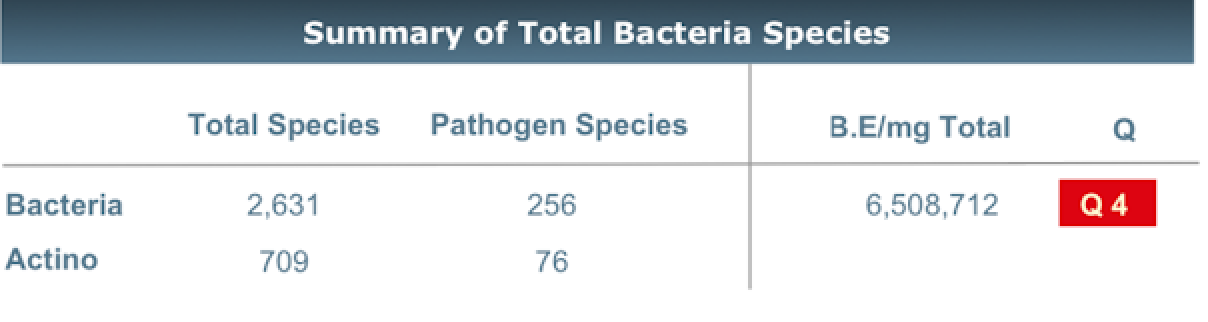
One of their mold tests also came back as a level 4 out of levels 1-4 for high relative moldiness!
Here’s my key takeaway—and why I’m sharing this with you:
1. The mineral depletion we saw on the HTMA labs was just one piece of the puzzle. It raised an important question for me: Why were these minerals so low? Based on their intake forms and symptoms, I had a strong suspicion of mold exposure. (Of course, it’s not always mold—sometimes other red flags point us in a different direction.)
2. Mold significantly depletes minerals. And when mineral levels are imbalanced or depleted, the body becomes more susceptible to heavy metal accumulation.
3. Let me scream this from the roof tops - the food elimination, the probiotics, the medicines, don't solve the root cause issues here!! She was agonizing about what combo of foods to eliminate, worried about his gut, and meanwhile deeper problems were going on.
Take a look below at Marisa’s little one’s HTMA sample from March 2025—you can actually see the heavy metals starting to be released through his hair.
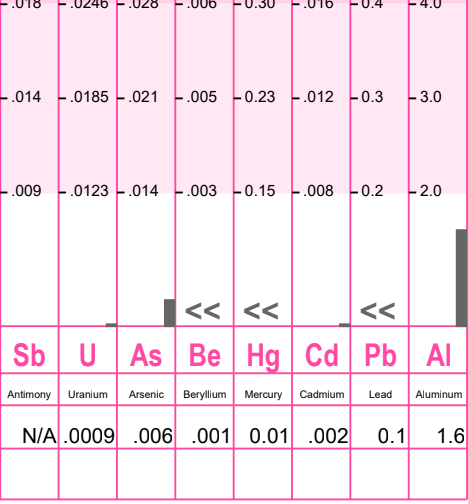
Once we started addressing his current toxin exposures and supporting his mineral levels, we saw real progress—his food sensitivities began to improve.
But the deeper root cause was still present: the bacteria and mold in the home.
Minerals can be a powerful support in the short term—they help stabilize the body and prevent things from spiraling further. But this is exactly why I don’t stop at mineral and heavy metal testing alone.
The Fed Well Foundations program goes far beyond labs. Because symptoms like food reactions, mineral imbalances, and heavy metal accumulation don’t just appear out of nowhere.
There’s always a why behind them.
Mineral tests are just the beginning—a screening tool to point us in the right direction, and then we fix the mineral imbalances and figure out other lifestyle and supports that are needed as well.
What I do is dig deeper to uncover what’s really driving the issue at its core.
And when I say deep, I mean really deep.
Even if, like Marisa, you can’t tackle everything at once—like hiring a mold inspector—my role is to help you identify what’s likely playing the biggest role and create a clear, realistic action plan that works for your pace.
Having outside insight and lab data can also be incredibly helpful for getting everyone on the same page—especially partners who like to see clear evidence. I’ve supported so many families where that extra clarity helped turn gut feelings into confident next steps.
You don’t have to do it all at once—we take steady, manageable steps and uncover more answers as we go.
Click below to learn more about the the Fed Well Foundations program!
Let me help you make sense of what’s really going on.
I’ve seen so many cases like this, and my goal is to give you the clearest path forward—so you know exactly where to focus your time, energy, and resources, just like I did with Marisa.
Case Study: reacting to “everything.”
Marisa was dealing with a baby struggling with so many symptoms and it seemed like the reactions were to lots of foods.
Often I see this with any number of symptoms - behavior issues, OCD, sleep issues, immune dysfunction, rashes, GI issues - that's the tip of the iceberg.
This is what she had emailed me when we started working together:
“I hope this all makes sense. Writing it all out, I feel like a mad woman that just made a mess of everything and has made my situation impossible to navigate. I stare at my food diary for hours every day just analyzing trying to figure out what causes certain symptoms. It’s exhausting because I feel like I can’t see it. I don’t know if I am just not looking at the right areas in my food diary when he has a reaction, or if food can cause reactions sometimes and be fine other times hence I struggle finding things that cause symptoms consistently, or if I just haven’t found the right combination of triggers to cut that gets rid of his triggers (thought the top 12 and latex free would have done that). I am terrified that I am taking too long to find his triggers and get them cut from our diet to help his gut and therefore worried and stressed that I am messing him up long term. Susanna, this is so hard. I know you understand though.”
If you’re here, chances are you’ve been in Marisa’s shoes. Your child has gotten a diagnosis or is dealing with symptoms. You’ve tried elimination diets, supplements, specialists and spent countless hours trying to figure out what’s going on.
When I reviewed Marisa and her toddler’s intake forms and HTMA lab results, there were clear signs that something deeper might be going on. Based on their story and symptoms, I suspected mold could be a contributing factor.
But—before jumping into any kind of mold detox, we had to address the significant mineral depletion and heavy metals showing up. The body needs a stronger foundation before it can safely handle detoxing anything as intense as mold (aside from addressing current exposure, of course).
I guided them through simple, affordable steps to check for mold (I actually dedicate a full week to this inside my program) and shared how to find a thorough, reputable inspector—since that part can be tricky.
They began by focusing on mineral support and the other steps I outlined. Within jus ta few months, the food sensitivities went away! Then, in June, they finally moved forward with a mold inspection based on my original recommendation.
A few days ago, as an update, Marisa emailed me: not only did mold show up—but there were also very high levels of bacteria found throughout their living space.
One of their mold tests also came back as a level 4 out of levels 1-4 for high relative moldiness!
Here’s my key takeaway—and why I’m sharing this with you:
1. The mineral depletion we saw on the HTMA labs was just one piece of the puzzle. It raised an important question for me: Why were these minerals so low? Based on their intake forms and symptoms, I had a strong suspicion of mold exposure. (Of course, it’s not always mold—sometimes other red flags point us in a different direction.)
2. Mold significantly depletes minerals. And when mineral levels are imbalanced or depleted, the body becomes more susceptible to heavy metal accumulation.
3. Let me scream this from the roof tops - the food elimination, the probiotics, the medicines, don't solve the root cause issues here!! She was agonizing about what combo of foods to eliminate, worried about his gut, and meanwhile deeper problems were going on.
Take a look below at Marisa’s little one’s HTMA sample from March 2025—you can actually see the heavy metals starting to be released through his hair.
Once we started addressing his current toxin exposures and supporting his mineral levels, we saw real progress—his food sensitivities began to improve.
But the deeper root cause was still present: the bacteria and mold in the home.
Minerals can be a powerful support in the short term—they help stabilize the body and prevent things from spiraling further. But this is exactly why I don’t stop at mineral and heavy metal testing alone.
The Fed Well Foundations program goes far beyond labs. Because symptoms like food reactions, mineral imbalances, and heavy metal accumulation don’t just appear out of nowhere.
There’s always a why behind them.
Mineral tests are just the beginning—a screening tool to point us in the right direction, and then we fix the mineral imbalances and figure out other lifestyle and supports that are needed as well.
What I do is dig deeper to uncover what’s really driving the issue at its core.
And when I say deep, I mean really deep.
Even if, like Marisa, you can’t tackle everything at once—like hiring a mold inspector—my role is to help you identify what’s likely playing the biggest role and create a clear, realistic action plan that works for your pace.
Having outside insight and lab data can also be incredibly helpful for getting everyone on the same page—especially partners who like to see clear evidence. I’ve supported so many families where that extra clarity helped turn gut feelings into confident next steps.
You don’t have to do it all at once—we take steady, manageable steps and uncover more answers as we go.
Click below to learn more about the the Fed Well Foundations program! (“Early Bird” Black Friday applications are now open!)
Spots are limited because I offer individualized support to every family inside the program.
🗓️ Enrollment closes Wednesday, November 26th at 8pm CST for the early bird discount!
Let me help you make sense of what’s really going on.
I’ve seen so many cases like this, and my goal is to give you the clearest path forward—so you know exactly where to focus your time, energy, and resources, just like I did with Marisa.